Wednesday, August 07, 2024

The Return of Table Beer

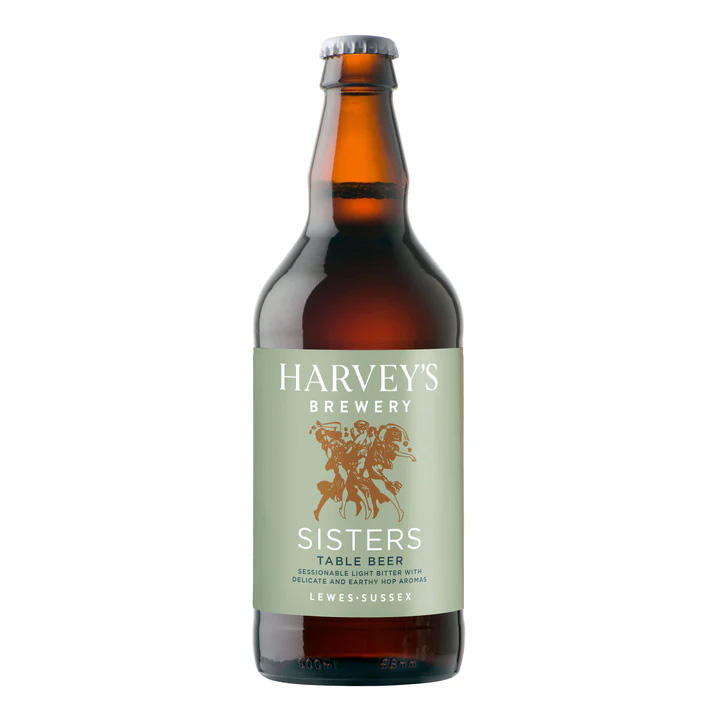
On 1st May this year, Harvey’s announced that they would be renaming the following beers Mild (3%) and IPA (3.4%) to Dark Mild (3%) and Sisters Table Beer (3.4%). The latter move was significant, as Harvey’s became the first major regional brewer to include a table beer in their range, which up to that point over the preceding decade was the preserve of microbreweries and small-scale independents. When pressed on the decision for the name change, the brewery’s marketing manager Zoe Prescott noted, “the decision to transition to the Table Beer style name is rooted in evolving consumer tastes. Table Beers offer a light, easy-drinking experience with an ABV ranging between 2.8% and 3.8%. This adjustment better aligns Sisters Table Beer with contemporary preferences, while our Wharf IPA continues to cater to those seeking bolder, hoppier flavours.”[1] This change in consumer tastes has facilitated the resurrection of Table Beers in recent years, yet the move by Harvey’s could widely be seen as a marketing strategy to encourage higher sales for their session level beers. When describing session beer, Martyn Cornell humorously quipped “it’s an important plank in British pub culture, the 4 per cent abv or less drink that enables the British pub goer to down multiple pints during the evening without falling over.”[2] Table Beers are not a specific beer style as such, they can range light blonde to dark with a gentle to moderate hoppy bitterness, traditionally they were brewed between 1%-2.5% ABV although there have been examples as high as 3.8%; indeed it could be argued that Table Beers are no different to the likes of Session IPA’s, Mild, AK, Bitter and Blonde Ales, which are generally brewed between 3-3.9% ABV, around the same level as your average Table Beer. Could the likes of beers like Hooky (3.4%)Trinity (3%)Lighthouse (3.4%), or Courage Light Ale (3.2%) be considered examples of Table Beers since they more or less fit into that category even-though they are not marketed a such, the recent marketing decision by Harvey’s has further diluted the chasm between Table Beer and other types of Session beers, are we on the precipice of a sudden rise of existing beers jumping onto the Table Beer bandwagon. Indeed it’s growing popularity could be seen as the next big thing to lure drinkers to beer, just like Golden Ales did back in the 1980’s, indeed, Taylor Laabs writing in 2017 just as the Table Beer craze was yet to take off in the UK, noted “table Beers are the next big variation of Session IPAs and Ales, as they provide all of the punch you’d expect from a hoppy session with an even lower alcohol content that borders on light beer status.”[3] To understand more Table Beer’s recent return to prominence, we need understand more about its history and how brewers produce such a low strength beer, without having to compromise on flavour.


The origins of the Table Beer are rather intriguing; indeed, it was another name for small beer which was generally brewed to a lower strength. It has been around since medieval times, and became quite popular in era before clean drinking water became commonplace in the population, as Table Beer was safter than drinking the unsanitary water that flowed through many towns and cities, often infected with all sorts of bugs and raw sewage. Brew Your Own notes “originally table beers were brewed to be consumed by the whole family with each meal (including breakfast). Beer was safer than water, but low alcohol was necessary to avoid both dehydration and perpetual drunkenness.”[4] This type of beer had a utilitarian aspect to it, as its low strength meant it could be drunk by a wider cast of the population, Ron Pattison notes “in the days before easy access to clean drinking water, Small Beer was the everyday drink of young and old. It was seen as a necessity, not a luxury.”[5] Sheep in Wolf’s Clothing noted “it was very much the drink of the working classes. Rustic table beers were sustenance for a life of toil, sweat, and tears. All were to partake, including servants when the upper classes later embraced table beer.”[6] Over time, table beers had become quite popular and became a mainstay in Europe and colloidal America, in the UK it had become so widespread that even well-known educational establishments like Eton College and Cambridge University were brewing their own table beers for their scholars, up until the 18th century small beer was the most commonly known drink in the general population, breweries generally developed Table Beer from a process was known as Parti-gyle, which consists of the second runnings from the brewing process, another method is to split the batch, dilute the first runnings, and the remaining mixture boil for longer, in order to produce a stronger beer, although sometimes other unscrupulous methods were used in the production of small/ Table Beer as a means of dodging tax such as brewing from unmalted barley. Its appeal was additionally helped by it’s low wholesale costs, in 1782 a barrel of table beer would only be taxed for 3 shillings per barrel, whilst a barrel of strong would be taxed at a comparatively high 8 shillings per barrel, so there was good economic sense for its prevalent usage. Yet by the 19th century, Table Beer was on the decline, as clean drinking water became increasingly available, the demand for small beer plummeted, and to make matters worse, Pattison notes “officially, the classification “Table Beer” disappeared in 1830, when the tax was shifted from finished beer to malt and hops. Though low-gravity beers continued to be brewed under the name of Table Beer, they gradually dwindled away in the second half of the 19th century.”[5] In the light of the tax changes, the big London brewers abandoned the production of table beers as there was no longer a tax incentive to brew weaker beer, although one intriguing outlier was Scotland, where table beer was brewed at a greater rate than their stronger equivalents and generally had a good reputation, brewers like William Younger and Maclay were still brewing table beers into the early 20th century. The reason for its demise, Pattison adds “ultimately, Table Beer was killed off by the rise of low-alcohol alternatives; first in the form of Dinner Ales and Light Bitters, beers of 4- to 4.5-percent ABV, which boomed in popularity from the 1860s on, and then by the drop in strength of standard beers after World War I.”[5] And what was once a popular and widespread beer style, it’s decline could either be seen as a tragic or an important stepping to stone to the development of latter-day beer styles like Bitter, Light Ale or Mild that were prevalent during the 20th century. The eventual resurrection of Table Beer would come from an unexpected source. 


The Kernel Brewery was set up in Bermondsey by former cheesemonger turned brewer Evan O’Riordan in 2009, operating from railway-arches initially using a four-barrel kit, he utilized the skills he had gathered as a cheesemonger and transferred this knowledge to brewing beer. Innovation was key to this drive, with early releases including Imperial Brown Stout (10.1%) borrowed from an 1856 Barclay Perkins recipe, India Pale Ale Black (6.5%) that blurred the boundaries between IPA and Porter, and Pale Ale Citra (5.1%) the first of many experiments with different types of hops. The early rumblings of a revival for Table Beer came from across the pond, during a visit to the US, brewer Phil Lowry sampled a 3% version of American Pale Ale by 21st Amendment Brewery. Upon his return to England, he developed Trinity (3%) at Redemption Brewery, which at the time was marketed as a session IPA. Spurned on by their success, Riordan produced Table Beer (2.9%) later that same year, which they subsequently described as an attempt to brew a low alcohol beer that did not suffer from lack body or character, yet full of hoppy aromas and a balanced bitterness. Lily Waite noted “though not the first low-ABV pale ale to emerge in the London scene, it’s regarded as a lodestar: a beacon of refreshment, balance, and flavour, to which brewers have long aspired.”[7] Yet it’s eventual success was slow to take off, as Riordan later remarked “Pale Ale was our most popular beer, and it took a long, long time for Table Beer to even pass IPA. Like, five years.”[7] Today, the beer has become of their best-known and flagship releases, as part of their core range, yet its eventual success was attributed by a change in consumer tastes. However, during the 2010’s these beers were seldom to come by as breweries continued to elude this style, and any low ABV was always marketed as a different style; one exception was Little Lenny (2.7%) released by Brick Brewery in 2015, it was promoted at the time as a Table Beer. They built on this in early 2018, with Peck (3%) which debuted at the Deptford Craft Beer Festival that March. Going on general release the following month, it was described at the time as having a distinct hop character despite its low strength. By the late 2010’s, the fortunes for Table Beer were changing, as drinkers were moving to lower alcohol beers, indeed between 2018-2020, sales of lower ABV beers rose by 381% in the UK, Nicole Kobie noted “Siba's annual survey shows 41 per cent of retailers expect to see the no-alcohol and low-alcohol category grow this year (2020), and one in three 18-24 year olds opting for alternatives.”[8]  The growing target audience, was also partly attributed to a growing trend for healthier lifestyles, which the brewers took to their advantage. In 2017 Small Beer Co. was established, they broke new ground at the time for being the first brewery to exclusively brew lower alcohol beer of up to 2.8%, with a remit to produce lower ABV beers that did not compromise on flavour. Up until that point, low alcohol beers were criticised for being thin, bland and lacking in taste, yet Small Beer’s founders James Grundy and Felix James sought to turn that around. Formerly working for distillers Sipsmith they utilized their experience and skills towards brewing, Phoebe French noted “with James’ experience in beer, the pair have “reworked the entire brew process” allowing them to naturally maximise flavour and minimise alcohol.”[9] They saw a gap in the market with potential for consumer demand which they subsequently took advantage of, and their growing success prompted other breweries across the UK to produce and market their own Table Beers. 


The growing craze for Table Beer in the UK started around 2019, that year the newly launched Futtle Brewery released Organic Table Beer (3.2%), whilst the East London Brewing Co. produced Table Beer (3.4%) initially as a one-off green hop beer but proved popular enough that they subsequently re-released the following year as a regular part of their range, the same year Wildcard Brewery launched their Table Beer (2.7%), made with fresh Australian Enigma & Vic Secret hops that helps give it a unique flavour profile of citrus and tropical fruits, it was one of their first beers that helped put the brewery on the map for their innovations, it would also go onto win awards including Champion Beer at SIBA SE Keg Competition 2020. Towards the end of that year, Five Points Brewing Co. were in the process of developing their Micro Pale (2.8%), initially planned as a cask only release, due to onset of lockdown in Spring 2020, the brewery decided to sell in bottle instead and it was put onto general release in May that year. They boldly claimed in their promotions although it was micro in strength, it was not micro in taste; it was packed with Cascade, Chinook and Vic Secret hops along with a mixture of Oats, Caraphils, Munich and low colour Maris Otter Malt, for that distinct flavour profile. The reason for this uptake in production for Table Beers, the British Guild of Beer Writers mentioned at the time “low and no-alcohol beverages continue to be a growing trend in the UK, where last year an IWSR survey found that 65% of alcohol consumers aged 25-34 were making a conscious effort to cut back on their intake.”[10] Later the same year, Burning Sky released Tail Crush (3%) their first Table Beer, whilst Edinburgh based brewery Newbarns resurrected the Scottish tradition of Table Beers with their release Callister (3%), which they described as a modern take on the style, interestingly they used Golden Promise, a heritage barley grown in Scotland in order to replicate the traditional taste. Another example influenced by Scottish brewing heritage was Siphonaptera (3.8%), first released in July 2021 by Glasgow based nanobrewery Epochal operated solely by Gareth Young; generously hopped with Saaz hops it was on the stronger end of the scale for Table Beers, its aroma has said to contain hints of overripe lemon tea, honeysuckle, beeswax and violets, while the flavour is airy, light with a refreshing bitterness. One of the brewery’s first releases, uniquely made using his barrel ageing method which he does for all his beers, one writer noted “his beer is fermented with a multi-strain yeast, cleansed to rid them of excess yeast and then allowed to mature to completion in oak barrels with a handful of whole-cone hops. The finished product is naturally carbonated in the bottle.”[11]  The same year saw the likes of Pango Table Beer (2.8%) by Fauna, which they named after the Pangolin, one of a number of animal themed beers from this Arundel based brewery; Table Beer (3.1%) by Brick Brewing, which utilized Simcoe hops, Rustic Table Beer (3%) by Burning Sky, matured in steel tanks then dry hopped with Kazbek hops for added flavour, subsequently an 8-month barrel aged version of the beer was also developed. The year ended with the release of Restoration Table Beer (2.8%), by Abbeydale, one of the first Northern brewers to release a Table Beer, finally putting to rest the suggestions that Table Beer was limited to breweries in London and the South. The year 2022 saw a flurry of releases, early on Black Iris debuted Cheese Riot (3%), inspired by Belgian style Saisons, a pale beer made with adjuncts of coriander and rye along with Talus and Citra Cryo hops that adds to the flavour profile. A light and sessionable beer, named after the Cheese Riot of 1766, incidentally the brewery stated that this beer goes well with cheese. In February, Brockley Brewery released Table Beer (2.8%) made with a combination of light malt with a mixture of Simcoe, Chinook and Citra hops. The mixture of flavours helped give the beer some added force despite its low ABV, imparting a bitter and citrussy flavour along with a creamy mouthfeel. In June, Whiplash produced Ephermeral (2.8%), it was made with Hersbucker Hops, noted for their subtle spice notes and fermented with Belgian yeast strains, basil and fresh lemon peel are added to the latter stages of the maturation process before canning. The same month, Fierce Beer in collaboration with Mash Gang produced Ocean Drive (1.9%) described as a fruited West Coast IPA, this features Citrus, Cascade and Chinook hops, blended with mango, pineapple, lime and grapefruit, blurring the lines between beer and fruit juice; other releases included Small Wonder (2.8%) by the Goodness Brewing Co, which was heavily influenced by East Coast IPA styles; Scoff (3.5%) by Drop Project, which the brewers claimed packed some serious flavour despite the low ABV, and A Comforting Embrace (3%) by Queer Brewing that blended a combination of Nelson Sauvin, Riwaka and Ekunot hops blended with oats and wheat for a smooth body. They followed this in 2023 with Softboi (3%) that uses US hops such as Chinook and Strata in the mix. Meanwhile in January, Brick Brewery added Table Beer (3.3%) to their roster, their first release of the year it used a combination of Enigma and Galaxy hops. The following month, long-established brewer Hook Norton jumped on the Table Beer bandwagon and released Lock Steady (2.5%), an easy drinking pale ale as part of their brewer's choice range, made in conjunction with their 175th anniversary celebrations. With the Summer months approaching, in August, Chiltern Brewery released Barely There (1.8%). Although not advertised as a Table Beer as such, uniquely for a beer in this class as its partly produced using the parti-gyle process, in this instance it is created by utilizing the second and third runnings of their much stronger beer Bodger's Barley Wine (8.4%), the residual worts were run through the copper boiler again, where a combination of hops including Goldings, Bulion, Cascade and Olicana were added to the mix before it was fermented. Meanwhile, later the same year, Manchester based brewer Cloudwater released Meadow (3%) that utilized highly aromatic hop varieties like Citra and Mouteka to compensate for the low ABV and give a flavour profile of tropical and citrussy tasting notes. Already in the first half of this year, there have been several releases, January saw the likes of Table Looper (3.8%) – Full Circle Brewing Co. come onto the scene, a collaboration with Wolf’s in Sheep’s Clothing, it’s a milder version of Looper (6.4%) which utilizes the same recipe yet brewed at a lower ABV, meanwhile the following month, Gravesend based brewer Iron Pier debuted Table Beer (2.9%) which utilizes a complicated setup featuring a quarom of hops, where Idahoe 7 and Vic Secret are used during the boiling process, whilst Mosaic and Simcoe are added later during the dry hop stage. This allows for more flavour to be extracted, giving it more depth despite its low ABV. Also released the same month was Table Beer (2.5%) by another Kent based brewer Brewing Brothers, noted for its high-level oat grist that gives the beverage more body and depth. 


This brings us full circle to the recent release (or rebrand) of Sisters Table Beer (3.4%) by Harvey’s back in May. It’s release fully puts into context that many of the Table Beers released over the past decade are no more than Session IPA’s or Blonde Ales in disguise as they tend to be pale in colour and are heavily influenced by stronger beer styles like East Coast IPA, to the point some examples try to mimic the IPA flavours by adding a flurry of various hops into the mix. Rather noticeable all these beers are produced using the single-gyle process which means that they are produced from a single parent mash, whereas traditionally Table Beers were produced using the parti-gyle process from the second or occasionally third runnings. Such historic methods would be frowned upon and disowned by most commercial brewers nowadays, which explains why most modern Table Beers are disconnected to their historic counterparts. The modern production of Table Beer, is based on the remit on producing beers that although lack in strength, compensate with bushels of flavour. The home brewers organisation Brew Your Own state “in order to produce a table beer that resembles beer rather than malt-seltzer, a brewer must take the recipe and brewing techniques for session beer and push them further: Finding ways to extract the compounds that contribute body, aroma, and color while minimizing carbohydrates; or loading up on high-protein grains to boost protein and body, mashing at a remarkably hot temperature to create mostly unfermentable dextrins.”[4] They suggest using a flavoursome malt base like Maris Otter, Vienna, Munich, or dark wheat. Use high protein grains like oats or rye, a low-attenuating yeast strain or one that produces a high amount of glycerol, French saison strains are good example. Use calcium chloride rather the gypsum to help give it body, along with lactose for added body and sweetness. Potent and aromatic hops like Mosaic, Hallertau Blanc, Citra or the elusive Nelson Sauvin are useful adjuncts, as they add to a distinct and characterful flavour profile, occasionally they are also added to the dry hop for additional flavour, before dispensing. According to Brew Your Own, due to the low ABV, various technical problems can occur, there is little hop and malt character to hide flaws, the miniscule amount of malt can lead to a lack of backbone in its flavour, and produce a thin, watery and bland mixture. This is a problem that has afflicted brewers over the years when producing Table Beers, Lily Waite underpins this as “without particularly bold flavours or a high ABV, Table Beer has little to hide behind. Sweet malt flavours dodge and duck through bright, fresh hop character reminiscent of pine and citrus fruits, but with an intensity of flavour you'd expect from a beer a couple of percent stronger. It does have a fullness of body, achieved through high mash temperatures and oats in the grist, which greatly contributes to its characteristic balance of flavour and drinkability.”[7] It should be lauded that brewers up and down country have put in the effort over the past decade to produce Table Beers with high calibre of ingredients and production processes in order to make flavourful products, from the barrel ageing efforts with Siphonaptera (3.8%) to the continental influences of Cheese Riot (3%) which uses adjuncts of coriander and rye. Yet by sticking to the same IPA style formular they risk trapping themselves into a doom loop that would risk innovation and the ability of borrowing from a wide array of other beer styles like Porter, Bitter, AK or Mild. The Small Beer Co. is perhaps unique to this formula as it essentially produces Table Beers influenced by a whole range of beer styles, therefore brewers should be adapting from a number of styles not just IPA, just like the Table Beers of the distant past once did, otherwise one day Table Beer would just be another byword for Session IPA, which would be an opportunity lost. 


List of References

Wednesday, July 31, 2024

Beer Review: Tower Burton Strong Ale

Brewery: Tower 


Style: Strong Ale


ABV: 6%


Location: Burton-on-Trent, Staffordshire


Aroma:  Strong whiffs of plum, figs and raisin washed down with lacings of vanilla, oak, sherry and plenty of malt.


Colour: Amber brown with a thin white head that quickly dissipates


Taste: A balanced bitterness with a sweet caramel background, the sherry like oak qualities come-through in the background giving a strong aftertaste. The mouth-feel is on the heavy side, perhaps a touch buttery, however it adds to the overall experience.


Verdict: A rather delicious beer and a good example of a strong ale that hits all the right notes, there is a good balance and range of flavours going on here, it’s not too bitter but the sweetness does not overtake it. The use of malt helps give it character and its strength help give it depth of flavours, although the only drawback is the use of Amarillo hops which adds nothing in terms of flavour, as it seems rather muted. A good example of a traditional Burton style ale.


Rating: 9/10


Friday, July 26, 2024

Ealing Beer Festival 2024

Earlier this month, I trekked to the depths of west London in search of the elusive Ealing Beer Festival; tucked away in Walpole Park nestled on the edge of town, it was difficult to find without having to rely on my trusty map. Now in its 33rd iteration, beer festivals have been held in Ealing since 1987, when the first one dubbed 'Beers on Broadway' was held at Ealing Town Hall, after a brief detour to Acton in 1989, it came back to Ealing the following year, and despite a few gaps in-between, a beer festival has been held on an annual basis every Summer. Since 2008, the festival has been held at Walpole Park, following the radical decision in the previous year to make it an outdoor event, the area itself is held within an enclosed space within the park grounds surrounding the central bar area, appropriately covered under a circus tent to avoid any risk from potential adverse weather conditions. The tent space is neatly divided in to four bars, along with separate mini-bars for low alcohol, cider & perry, as well as a keg bar; the latter example is a rising feature at CAMRA beer festivals, which I've encountered several times on my travels over the past few years. Although this is a welcome development since a number of independent breweries are now experimenting with keg beers, this is potentially controversial issue as this flies in the face on what CAMRA stands for, giving support to the perseverance and preservation to the UK's extensive cask ale producing industry, so any move towards keg has understandably been met with consternation from some of the membership. Another interesting feature to this was the inclusion of the low alcohol bar, over the past decade low and no alcohol beers have increased in popularity as people (especially the 18-24 age group) has embraced lower ABV alternatives, which is perhaps a reflection on growing health awareness and the decline in the pub drinking culture among the young, as they eschew the time-honoured traditions of the older generations, who would typically head down to the local boozer following a long day at the office.


The festival runs over four days, typically in July and always before GBBF, though since the latter is currently on hiatus this year, it means this festival has by default become the highest profile Summer
beer festival to be held in London this year. The festival primarily boasts beers from London and home counties, in particular Sussex, Kent, Surrey and Berkshire, although examples from breweries based further afield are also represented. Now, the expression, closing the barn-door after the horse has bolted often follows me when I visit beer festivals as I tend to visit them on the final day. This is somewhat ill-conceived and a poison chalice as I often miss out on the more interesting beers on offer, including the elusive limited edition festival specials of legend. So rather predictably on the day I visited with my friend (and fellow real ale enthusiast) Andy, only a quarter of the total beers were still available on tap, this severely put a dent into our plans and we were left with the grim reality of having to scavenge for the last remaining scraps in the barrel, if you pardon the pun. Fortunately, there was just enough choice, to try beers from several different beer styles, which I often aim to do when attending beer festivals. The first beer I tried was Golding Bitter (4.1%) by Kent Brewery, it as rather hoppy with a notable bitterness that hit the tastebuds at full throttle upon first sip, it was complimented with a dry mouthfeel that was counteracted by the distinctive malt forward background that helped extenuate the compelling use of Goldings hops, which the brew is keen to celebrate, despite its low ABV it's ingenious use of flavourings helped make it stronger than its official strength would suggest. Moving on, I quickly noticed that the selection of Stouts and Porters were in low supply, so after sampling a few that were remaining I settled on Choco (5.8) by Stardust Brewery, a chocolate stout by nature it was a veritable celebration of this iconic sweet which would equally appeal to those with a sweet-tooth and fans of darker ales alike. Fortunately, in this case, the beer didn't fall into the trap of those overly flavoured and profoundly sickly pastry stouts that dominate the market at the moment, in this instance the brewers have put out all the stops to make this a memorable drink. Rather appropriately for a stout, it was strong, with potent flavours of roasted malt, hints of chocolate, coffee and berry fruits, with traces of butterscotch running through the palate. On the aroma front, although I could detect a profound whiff of chocolate, there was intriguing vanilla hint going on in the fringes. Moreover, the mouthfeel was heavy and cloying, although it lacked creaminess which would have made the beer more luscious. There was a profound sense of strength going on with brew, which is definitely not the type to be drinking several in a session, unless you intend to get absolutely smashed. For the third brew of the day, I headed 'oop North' to sample Rocket (4.8%) by Manchester based brewery Marble. Named the iconic steam locomotive that carried the first regular passenger rail service (between Manchester - Liverpool) in 1830, as a train enthusiast I was keen to try this. Unfortunately, in my case I encountered neither soot or smoke in the brew, as it was a rather typical northern style best-bitter boasting an amber-gold appearance with a gentle hoppiness, balanced by a sweet-malt background. It was a rather easy-drinking beer despite its strength, although the lack of head put a dent into detecting any excess flavourings that may have been hiding in the barrel. It was far from impressive, as the flavours seemed trundle along at a low speed without hitting the mark by the time it reached it terminus.


At beer festivals, I typically go for at least one strong ale, amidst all the golden ales, porter, stouts and bitters that I typically try. IPA is usually a typical draw, as they are usually more common at festivals than their other strong-armed counterparts, and since it was the final day of the festival there was not much to choose from that at this point, other than an IPA or a low-level imperial stout measuring at 7.8%! With my appetite now on the wane, following a starched filled lunch of dosas and crispy bhajia, I settled for the IPA instead, which came in the form of From the Wave (6.4%) by Iron Pier, a Margate based brewery which I had become familiar with following my research into Kent's extensive green-hop beer industry. Rather predicably for an IPA of this class, it was packed full of tropical fruits, with strong citrussy aromas and flavourings that seeped through the tastebuds, there was a good smattering of hops in the background, although it was evenly balanced with a malty backbone, that boasted hints of caramel like sweetness, which provided a decent counterpoint to the action. Profoundly amber in colour like a tropical sunset, this brew boasted plenty of strength, yet the balance of flavours prevented it from being too overwhelming for the senses. Evening was setting in by this point, and with the last crumbs of energy, I decided to go north of the border for my final libation of the day, and sampled some Hurricane Jack (4.4%) by Fyne Ales. A session style blonde ale, it was more of a light breeze than a hurricane when it came to flavour, it was rather biscuity, light with hints of citrus swirling in the heather, it was lightly hopped and notably refreshing in its mouthfeel. There was not much going with this beer, which proved to be a disappointment, but by this point in the day in my depleted state, I was not too concerned trying to go for stronger and heavily hopped beers, so the brew easily served it’s purpose.  


My festival experience was rather mixed, since we attended on the last day, the lack of beers that were still available, severely put a dent on the proceedings, as I was keen to beers from a variety of styles, in particular brown and red ales which had all but run dry by this time. My waning, starch filled appetite was also increasingly having an effect, and with each successive drink, I found it increasingly hard to digest. So, if your new and inexperienced at the game of attending beer festivals, I would advise you attend on the first or second day, as there will be a wider array of beers available to choose from. I also advise against having a big meal before the proceedings, and eat in moderation between drinks, a trusty bag of crips or a protein filled snack is quite advisable, as it doesn't affect the appetite and helps settle the stomach which is crucial if you intend on sampling several drinks over the course of the day. As a location it was bit difficult to get to, and its alfresco park-based setting is a tad-orthodox, so if your seeking comfort I would advise you bring a blanket and a foldable chair along, if you don't want your behind covered in grass and dirt. As a festival I didn't really rate it, although attending on the last day severely put a dent on my judgement with the lack of beers remaining, yet being ever the intrepid explorer, it was a yet another festival to add to my growing bucket list. 


Saturday, July 20, 2024

The Lost Pubs of Elstree

As you travel down Elstree High Street, you’d be shocked to find out that this street alone has lost three pubs over the past twenty years. This loss is particularly potent as these businesses have been around for over three centuries and served the local area during its commercial height during the stagecoach boom of the 18th and 19th centuries, as it was historically situated on Watling Street, which was a direct route from London to the Midlands. The very existence of this road was essential to the area’s creation, it was originally built as a trading route by the Romans, by medieval times, it was a resting place for pilgrims en-route to St Albans Abbey. In the 14th century, in order to serve increasing demand, a shrine and a Lady Chapel were built in the area, along with a number of inns, the area was also known for its thriving pottery trade which added to its financial fortunes.  Elstree was originally a chapelry of the Abbey before it became a parish in 1424, it continued under their ownership until the dissolution of the monasteries, when it sold onto Anthony Denny, a courtier of Henry VIII, it was then sold onto a succession of owners over the centuries. According to the writer Daniel Lysons in 1811, its current name is derived from the word Eald-Street, or the old road which denotes Watling Street which runs through it. By the 18th century, the area became increasingly built up thanks in large part to the major trunk route that ran through it, the high street alone featured a number of businesses including a butcher, blacksmiths, carpenters, carriers, grocers, a wheelwright, harness maker and two bakeries. Increasing traffic from stage-coaches led to the establishment of a turnpike which helped sustain the area economically, at the time there was as many as six inns operating in the area, including the Artichoke, the Holly Bush, the Green Dragon, the Plough, the Red Lion, and the White Horse, a number of these were owned by Thomas Clutterbuck & Co at the time, whom ran pubs all over Middlesex and Hertfordshire. Four major stagecoaches stopped at these inns, including The Self Defence, The Accommodation and the Safety (London-St Albans) and The Crown Prince (London-Birmingham), furthermore a London-Shenley service also operated in this area. With the decline of the stagecoach trade due to the establishment of the railway line in 1868, the number of pubs in Elstree gradually dwinded, The Green Dragon was turned into residential housing whilst The Red Lion was demolished in 1936. Three of the pubs, The Artichoke, The Holly Bush and The Plough carried on trading into the early 21st century, although rather intriguingly they closed within a few years of each other in the early 2010's. Fortunately due to a combination of preservation orders imposed by the local council, and grade II listed status, the original buildings for these specific pubs still exist to this day, which makes their story rather more intriguing. 


The oldest of the three pubs was the Holly Bush, first opened as early as 1450, it started off as a late medieval era open hall. The building was altered over the years, it was extended in the 17th century and gained another storey when fireplaces were added. In the 19th century brick and tile-work was added to the frontage, along with a timber-frame, it was re-fronted, and a further 3-bay extension to the cross wing was built within the former stables area. Aside from its exterior, the pub contained a number of fascinating features, such as the 17th century staircase, Inglenook Fireplace and the original beam work which was allegedly sourced from Newgate Prison. Notably due to the street height, customers had to step down to reach the bar-area, indeed the pub was well known for a number of hauntings, in 1970 then landlady Trixie Cadle spotted the outline of a head and shoulders in the dark creaking around the vicinity, a bearded man was also spotted wandering slowly around the pub, unsurprisingly it later featured in an episode of ‘Most Haunted’. By 1974, the building gained the coveted award of grade II listed status and by the eighties, the outdoor toilets were demolished and transferred indoors. At one time owned by Courage where its symbol still remains above the door, and in its final years it moved onto selling cask ales like Marstons Pedigree (4.5%). However, by 2011, the game was up and it subsequently closed. Incredibly, as of 2024, the building is still vacant and on sale with no buyer’s forthcoming, currently intended as a residential, office or restaurant property, perhaps there’s still a chance it could become a pub again? Meanwhile on the opposite side of the road, going down-hill towards Barnet Lane, resides the former premises of The Artichoke; records of this pub date back to 1750 and was opened as a coaching inn, notable a stopping point for The Crown Prince stagecoach. The building was also used for other means, in 1823 it was used by magistrates to investigate the murder of solicitor William Weare who was killed over a gambling bet of £300 to amateur boxer John Thurtell, an inquest was held on the 23rd October 1823, inside the pub by county coroner Benjamin Rooke. In 1870, disaster struck when the building burnt down and the pub was subsequently rebuilt, which explains for its mid-Victorian appearance. In its later years it was run by former Hertfordshire brewer Benskins, which operated a number of pubs around Hertfordshire and near its brewery in Watford; in March 2007 it's then owners Catherine and Bob Byron sold the pub and it subsequently turned into an Italian restaurant called La Messeria, which closed in May 2011. The following year it was taken over by Mendel Tajtelbaum who renamed it The Shitabel, a Jewish learning and community centre, when the Tajtelbaum Trust acquired the building the council stipulated they not significantly alter the building, including the pub sign, although they were allowed to rip out the ground floor area to make way for a prayer area and add extensions to the rear and side of the building; although no longer pub, though it’s 1870 structure still remains recognisable, it is a sad reminder to what we have lost in the pub trade. Meanwhile, further up the high street, resides The Plough, purported to have been built 1637, originally known as The Swan. In the 18th century, the inn was renamed The Plough and following the decline of the stagecoach trade it became popular with cyclists and passing motorists. It was also notable for attracting an number of famous film luminaries living along Barnet Lane whom worked at the nearby studios in Borehamwood, including Alfred Hitchcock who frequented this establishment during the 1930’s. In recent years, it was turned into a Chinese restaurant called The East which subsequently was succeeded by Kiss Kiss, an Italian restaurant, before closing in 2016. The original structure remains standing, with many of its original features still intact including it original timber frame structure, chimney stack and brick-work frontage. Another notable feature is the horse mounting block situated by the side building, which allowed riders to mount their horses with ease, after quaffing a pint or two. Rather fortunately, last year it was announced in the local press, pub company Star Pubs got approval from Hertsmere Council to reopen the pub for business, not only that, it’s former name The Plough with once again display proudly above the entrance and Elstree will once more have a pub serving the local area. 


The situation with the former pubs of Elstree High Street is a fascinating one, due to their historic status as coaching inns, preserved interiors and exteriors, the buildings for three of the pubs still remain intact, largely thanks to the buildings gaining listed status due to the numerous buildings of historic interest in the local area. The present state of the pubs is rather intriguing and not as forlorn as one would imagine, although The Artichoke has become a Jewish community centre, meanwhile The Holly Bush still remains vacant whilst The Plough is set to open as a pub once more, so there’s hope yet for the lost pubs of Elstree. 


Saturday, July 13, 2024

Beer Review: Long Man Best Bitter

Brewery: Long Man 


Style: Bitter


ABV: 4%


Location: Polegate, East Sussex


Aroma: Plenty of malt, with hints of a caramel coming through and some mild fruitness.


Colour: Orangey brown with a thin white head, that takes a while to dissipate.


Taste: Rather bitter on the tongue, can detect elements of sweetness, hints of smokiness and hedgerow berries. Mouthfeel is smooth, without being too carbonated which is good. A full bodied best bitter, that packs in a lot of flavour despite its low ABV.


Verdict: Although low in ABV, it has heaps of flavour for a session beer. The use of various malts is particuarly potent through its smokey and biscuty elements that are undercut with a hint of a caramel fruity sweetness. The hops are also at play here, with the profound bitter edge that reminds the drinker that its a traditional best bitter. A fine example of a Sussex best bitter, would definately give the likes of Harveys of Lewes a run for their money.


Rating: 8/10


Saturday, July 06, 2024

Top of the Pub Signs

Pub signs come in all manner of names and designs, many are steeped in history such as The Rose and Crown which celebrates the marriage union of the Houses of Lancaster and York when Lancastrian Henry Tudor married Elizabeth, the Rose of York in 1485, or The Royal Oak that memorialises the story when Charles II hid in an oak tree to avoid capture from parliamentary troops after the defeat at the Battle of Worcester in 1651. Some signs have referenced local industry and commerce such as The Railway, The Carpenters Arms, The Three Horseshoes or The Bricklayers Arms, whilst others have referenced iconic historical figures, with names like The George, The Duke of Wellington, Lord Nelson or Shakespeare being popular examples. A good number of pubs feature signs that swore loyalty to a particular monarch of time, with the earliest being The White Hart which was symbol of Richard II, latterly the King’s Head which was introduced following Henry VIII’s establishment of the church of England in 1534, or The Victoria in commemoration of the monarch’s long and eventful reign that lasted from 1837 to 1901. Although are large proportion of pubs signs that feature royal links, there have also been numerous cases of pub names reflecting the local gentry, notable military leaders, famous individuals, industry, mythology, animals and even sports like greyhound racing, cricket and fox hunting, yet they also share something in common as they have closely followed the changes in British society over time.


Many of these signs were introduced specifically at a time when the general population was largely illiterate, so signs tended to be simple in design and would generally show subjects of local or popular interest at the time they were built. This heritage persists well into the modern era with many pubs around the country still baring these historic names and signs; yet some pubs names are more common than others, for example currently there are over 500 pubs called the Red Lion currently in business within the UK, this astonishingly high number has remained consistently high despite the spate of pub closures over the past decade. This is followed by the likes of The Crown and The Royal Oak, both boasting over 300 pubs each, yet below these high figures the current standings become increasingly competitive and close, and with the continuous wave of pub closures and openings, these numbers tend to change with the times. So based on research from Pubs Galore, here is a potted guide into the current top ten pub signs (as of June 2024) that can be found in pubs currently in operation across the UK, along with some information behind the intriguing origins of their iconic names and designs.


10. The Kings Arms – 226 pubs

This particular sign continues on the fine tradition of pubs swearing their loyalty to the incumbent monarch of the time. In 1534, King Henry VIII broke with the Catholic Church and declared himself Supreme Head of the Church of England. A time of radical upheaval followed, a new version of the bible featured text translated into English, the monasteries were dissolved and Church property were taken under control. All references to Catholicism were outlawed, even down to pub names where owners changed the names, so the Crossed Keys became The Rose and Crown and The Ark was renamed The Ship for instance. Some went even further, and names like the King’s Head and the Kings Arms were established, in order to show unequivocal support for the King. Like it’s latter-day namesake The Crown, this sign is essentially timeless as it shows loyalty to the monarchy without having to change when a new monarch ascended to the throne. Most signs typically bear the current Royal Coat of Arms, which dates back to the time of James I, which was introduced following the union of crowns upon his ascent to the English throne in 1603, this design continues to be used to this day, with minor alterations over the years.


9. The Ship – 227 pubs

Its origins are steeped in a period of profound religious and political upheaval in this country. Originally it was known as The Ark in reference to the iconic religious text where Noah built an ark under the orders of God, in a bid to survive the Great Flood. However, with reformation and the establishment of the Church of England in 1534, since pubs were required to rid all links to Catholicism, the likes of The Ark became The Ship as a result of this. Although nowadays pubs bearing the name The Ship have more to with country’s seafaring and naval heritage than religion, most signs generally feature images of iconic flagships like the Cutty Sark, the Mary Rose or the HMS Victory to name a few. These pubs tend to be found in coastal or riverside towns, although examples further in land have been accounted. Despite its religious origins, this particular sign has radically changed in it’s meaning over the years, to one of swearing allegiance and support to the country’s naval defences which were essential to our defence from the 16th century onwards.


8. The White Horse – 269 pubs

A figure steeped in mythology, it represents purity, a triumph of good versus evil, in many myths and religious texts it is deemed to be the only pure animal to carry a God or hero. It has also been suggested that horses with white coats are a figure of courage and boldness, a spirit animal that helps bring confidence to the weary. The White Horse is also a dream figure that could represent incoming wealth, relationship issues, lifestyle changes or desire to break from personal issues. The symbol has appeared in various illustrations, statues and most notably the Uffington White Horse, a 3000-year-old prehistoric hill figure carved into the upper slopes of White Horse Hill. The use of the White Horse on pub signs dates back to the 17th century when a White Horse (in the form of a Unicorn) appeared on the Stuart coat of arms, although it is steeped in the theme of heraldry, its usage was likely to denote loyalty for the monarchy at the time. Over the years, this particular sign continues to evoke spiritual and philosophical significance, yet in times of conflict, this sign is steeped in the legacy for the continuous faithfulness for the defence of the realm.


7. The Swan – 270 pubs

The origins of the name are shrouded in confusion, some say it derives from the family crest of Anne of Cleves, whilst others argue it is sourced from the coat of arms of Mary de Bohun of Hereford, wife of Henry I, however, both theories are unlikely. Moreover, it has been claimed that this name was linked to the ancient trade guilds where in the 14th century, the Abbotsford Swannery and subsequently the Worshipful Companies of Dyers and of Vintners during the 15th century were granted rights of ownership on mute Swans, where they would mark the young cygnets during a process known as Swan Upping. Despite this, all unmarked mute Swans were declared property of the crown, whilst those that were marked by these designated organisations were destined as a prize food, served at banquets. These pubs are a former reminder of this practise, as these were often meeting places for workers from these trades, and a pub going by this name would imply fine dining, including roast swan. Swans are no longer eaten, however to this day the King continues to maintain protection of all Swans on open waters, particularly on the River Thames.


6. The Plough – 271 pubs

Perhaps the oldest example on this list, its name dates back to the medieval period when publicans took to naming their pubs and inns as a means of differentiating themselves from the competition. Such names like The Plough, The Hop Pole, The Boot, The Saracens Head and The Lamb and Flag became commonplace, and these could be represented by simple signs (or objects) which was particularly useful during this period, where there was a high level of illiteracy among the population, signs like The Plough were particularly useful as farming implements could as pub signs. The use of these names sharply declined following Richard II’s royal decree of 1393, where all pubs and inns were required to bear a sign, for identification purposes when visited the Ale Taster, whom would inspect and certify the premises during a visit. Invertedly, this also kickstarted the tradition of pubs naming themselves after the incumbent monarch or local gentry, generally reflecting the changes in society at the time. Despite these setbacks, a good number of these ancient and historic names continue to be of prominence, in particular The Plough which has evolved to commemorate the tireless endeavours of the local ploughmen as they strode their horse-drawn ploughs across the fields. By far the most common of the early pub names still in frequent use, it has progressed to become a testament to the farming industry and pub heritage.


5. The Railway – 280 pubs

During the mid-19th century following the introduction of the railway network in the UK, a rush of pubs across the land cashed in on this growing railway mania. A good number of these pubs were built near the newly opened railway stations, in order to cash in on the passing trade, which became increasingly profitable for the pub industry as the rail network spread across the country. So understandably a good number of these pubs were named after the railways, with such names like The Railway Tavern, Railway Inn, The Railway Arms and The Railway appearing, named in tribute to the industry they benefited from. Although over time railway related pubs have diversified when it comes to naming, The Railway by far is the most common and popular out of the fleet. Despite the reduction of the country’s rail network between the 1950’s-1970’s, a high number of pubs featuring this name still persist, even in areas that once featured a railway station, a timely reminder of an industry that once was abundant throughout the land.


4. The White Hart – 292 pubs

In 1393, then monarch Richard II issued a royal decree that made in compulsory for all pubs to bear a sign, in order to signify the premises when visited by the official ale taster for inspection. The sign of the White Hart, was Richard’s own moniker, which was derived from the coat of arms once used by his mother Joan, Countess of Kent, heiress of Edmund of Woodstock; when Richard II ascended to the throne, he adopted the emblem as his personal moniker. It has been presumed that The White Hart was a pun of his name, although it had more to do with signifying the noble power of the Hart, itself a word for a mature stag. Following its introduction in 1393, the use of the sign gradually became popular and widely used by pubs and inns during his reign, and continued to be utilized long after his demise. In turn this kick started the tradition of pubs using the personal monikers of the reigning monarch of the time, which featured such names like The White Lion (Edward IV), The White Boar (Richard III), The Rose and Crown (Henry VII) and The King’s Head (Henry VIII), to name a few. Yet the one that started them all, the White Hart continues to be the most popular, and currently it is the fourth most common pub sign in the country.  


3. The Royal Oak – 390 pubs

Much like its namesake The Crown, its origins date to the time of the restoration in 1660, when pubs and inns up and down the country named their buildings in honour of the new monarch, Charles II who returned to England after years in exile after the English Civil War. This particular sign dates from incident in 1651 when following defeat to the parliamentarians at the Battle of Worcester, the then Prince Charles evaded capture when he reached Bishops Wood near Staffordshire, by hiding in an oak tree for a day. When the troops gave up their search, he climbed down and escaped to France. Following the restoration, as a means of drumming up publicity for the monarchy, this story of good fortune was relayed across the country, even to the point when the 29th May (which was Charles II’s birthday) was declared as Royal Oak Day, should the message need to be further rubbed into people’s faces. This is in turn caused an outbreak of publicity for this story, and subsequently a good number of pubs were renamed the Royal Oak in memory of this courageous story which in turn enabled the continuation of the monarchy.  


2. The Crown – 467 pubs

The second most common pub name in the UK, its origins date to the time of Henry VIII when following the break with Rome and the establishment of the church of England in 1534, a number of pubs called themselves The Crown in support for the authority of monarchy. This tradition was temporarily ceased when all pubs were banned during the puritanical rule of Oliver Cromwell.  Following the restoration of the monarchy with the ascension of Charles II in 1660, in commemoration of the occasion, a number of pubs were named as The Crown in Charles’ honour. There is also a good business sense to this particular sign, as it has subsequently become a convenient way of showing loyalty to the reigning monarch, without the need of having to change it with the accession of a new monarch, this partly explains why a good number of pubs have retained this particular sign, when others have come and gone, since there was nothing in the rulebook that requested the publican to update the sign whenever the monarchy was succeeded.


1. The Red Lion – 509 pubs

The most common of all pub names found in the UK, its origins are swathed in mystery, some claim is symbolised acts of heraldry and chivalry, with the red lion notably featuring as the heraldic badge of such noblemen like John of Gaunt, and The Duke of Bedford. Yet the use of the Red Lion as a pub name dates from the time of James I (also known as James IV of Scotland), when he came to the throne in 1603, he ordered that all buildings of importance bear the Scottish royal standard, including pubs. The flag known as the Lion Rampant is the unofficial flag of Scotland, it has its origins to the time of Richard I who introduced it as a heraldic marker showing a rampant lion, it was subsequently adopted by the Scottish monarchs. Following the union of the crowns in 1603, the flag was adopted into the royal standard, which is made up of three flags each representing a nation of the UK, which also featured three lions (England) and a harp (Ireland), which continues to be used to this day. The Red Lion sign became known as a simplified version of the Royal Standard, although the number of buildings bearing the royal standard have dwindled over the years, a large number of pubs still bear the sign of the Red Lion, which itself is an intriguing throwback to James I royal decree, although latterly it has evolved to signify chivalry, strength, loyalty to the union and the monarchy.